
Urinary Health
Complete Bladder Health
Better microbiome health means a more resilient bladder.
- Most products only address the bladder.
- The gut and vaginal microbiome are part of your urinary defenses, too.
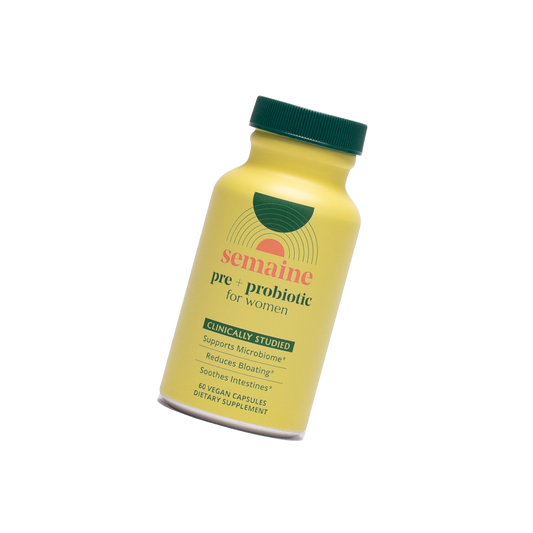
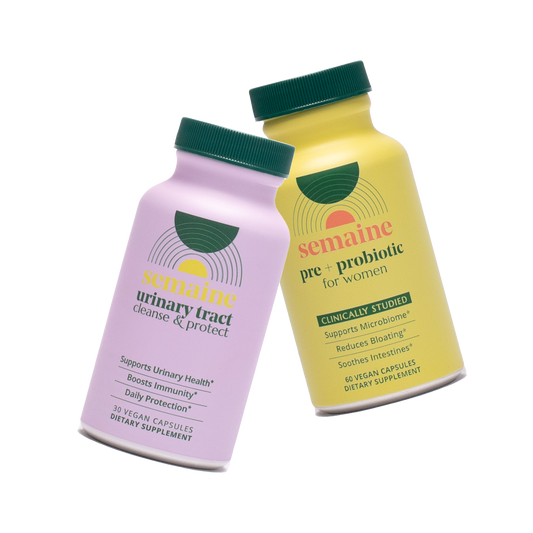
- Urinary Tract Cleanse & Protect supports the bladder. Pre+Probiotic supports the gut and vaginal microbiome upstream.
-
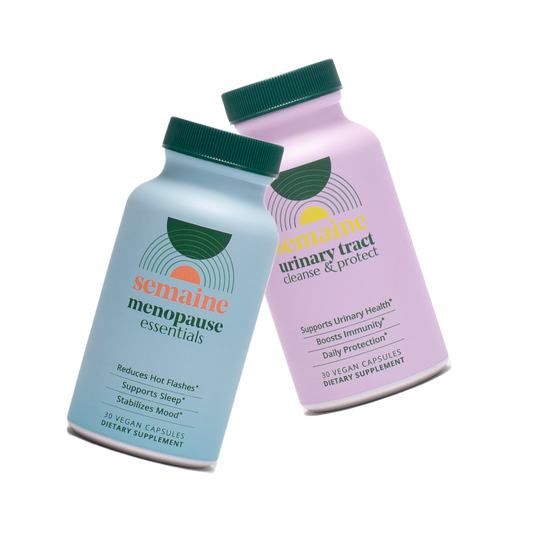
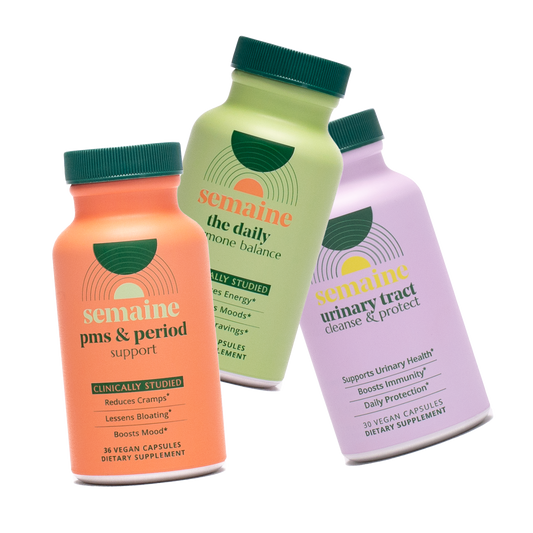
URINARY TRACT CLEANSE & PROTECT
Bladder Health, Immunity Support
-
Gut Relief, Soothes Intestines, Debloats



How to choose a daily urinary support supplement
Reviewed by Matt Crane, PhD, founder of Semaine Health. Published July 27, 2026. Last reviewed July 27, 2026.
Invest in daily urinary support at the bladder and, when recurrence is the concern, upstream in the gut and vaginal microbiome. These formulas are not antibiotics and they do not treat an active infection. Seek medical care for current urinary symptoms.
A useful daily urinary supplement is not defined by a first-party "best" label. Compare the ingredient identity, standardization method, daily dose, study design, study population, serving burden, and the limits of what was actually tested.
Favor ingredients whose prevention evidence reflects the newest, largest trials. D-mannose is popular and has a plausible anti-adhesion mechanism, but the largest recent placebo-controlled trial and recent pooled analyses have not shown that it reduces recurrence, so you do not have to settle for it. This is a prioritization criterion about an ingredient, not a verdict about every dose, population, combination, or brand. (MERIT, PMID 38587819; Vargas et al., PMID 41004704)
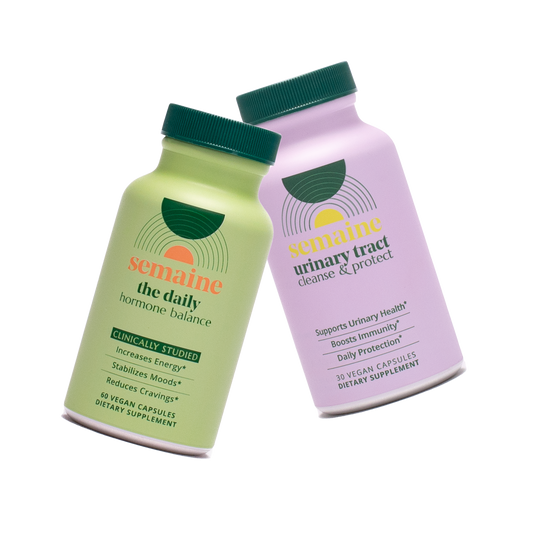
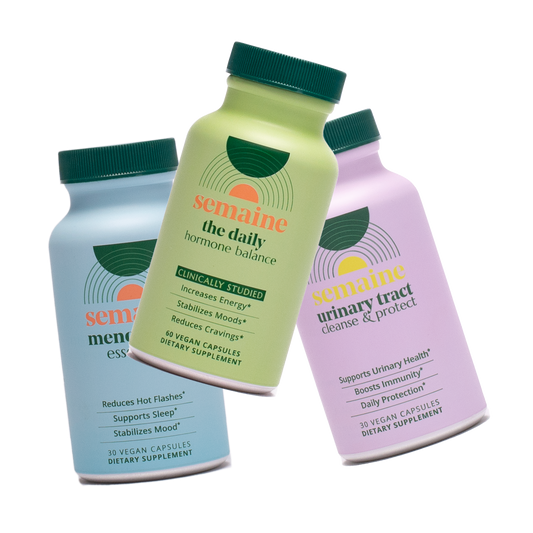
UTC&P is the primary choice on this collection when the goal is a focused, one-capsule daily urinary routine. Each capsule provides 120 mg cranberry phytosome and 240 mg hibiscus 4:1 extract, and the standard direction is one capsule daily. The cranberry ingredient used in the published RCT was standardized to 6% to 9% PACs by a DMAC spectrophotometric method. That is a disclosure about the cranberry-phytosome ingredient, not a claim that the capsule contains 120 mg of PACs. (Semaine UTC&P product page, retrieved July 21, 2026; cranberry-phytosome RCT, PMID 38999860)
The Bladder Resilience Protocol is the better fit when you want both the bladder-focused UTC&P formula and daily gut and vaginal microbiome support from Pre+Probiotic. The routine contains one UTC&P capsule plus two Pre+Probiotic capsules daily. It adds a multi-strain probiotic and prebiotic fiber to the cranberry-phytosome and hibiscus routine. (Bladder Resilience Protocol, retrieved July 21, 2026)
Evidence and limitations
| Criterion | What to check | Why it matters |
|---|---|---|
| Evidence quality | Look for randomized, placebo-controlled human evidence, then check whether the study tested the ingredient or the finished formula. | A mechanism, an ingredient trial, and a finished-product trial answer different questions. |
| Cranberry form and PAC disclosure | Look for a declared PAC quantity and assay method, or a named standardized cranberry ingredient with transparent delivery and study details. | Cranberry ingredient weight, PAC weight, assay, extraction, and delivery system are not interchangeable. |
| Dose and study match | Compare the label's daily dose with the dose used in the cited research, and check whether other actives make the finished formula different. | A dose match can make ingredient evidence relevant, but it does not turn that study into a finished-formula trial. |
| Daily-use design | Choose a capsule, powder, or multi-product routine you can follow consistently, while reviewing medication and care questions with a clinician. | The practical serving burden matters for a product intended for ongoing support. |
Frequently asked questions about daily urinary support
What is the best daily supplement for urinary tract health?
The best fit is a supplement you can take consistently that discloses a clinically studied cranberry ingredient, PAC standardization or delivery details, a study-matched dose, and clear evidence limits. UTC&P is one option within that framework because it provides 120 mg cranberry phytosome plus 240 mg hibiscus in one daily capsule, with randomized evidence for the cranberry ingredient and separate open-label evidence for the finished formula. It supports daily urinary tract health and may help reduce recurrent UTIs, but it is not a treatment for an active infection. (Semaine UTC&P product page, retrieved July 21, 2026; Semaine Clinical Trials, retrieved July 21, 2026; cranberry-phytosome RCT, PMID 38999860)
Is cranberry or D-mannose better for daily UTI prevention?
Prioritize cranberry products with transparent standardization and relevant human evidence before relying on D-mannose. The largest direct placebo-controlled D-mannose trial and recent conventional meta-analyses have not shown a statistically convincing recurrence reduction, although a favorable network meta-analysis means the total evidence is mixed rather than uniformly negative. This comparison is ingredient-level and does not establish that every cranberry product works or that every D-mannose dose or combination does not. (MERIT, PMID 38587819; Vargas et al., PMID 41004704; Han et al., PMID 39095666)
How much cranberry PAC do I need?
There is no single cranberry-milligram or PAC-milligram number that makes different products equivalent. Check the PAC amount and assay method when disclosed, or look for a named standardized ingredient with a transparent dose, delivery system, and human study. UTC&P declares 120 mg of cranberry phytosome, not 120 mg of PACs; the ingredient in its RCT was standardized to 6% to 9% PACs by a DMAC spectrophotometric method. (cranberry-phytosome RCT, PMID 38999860)
Can I take UTC&P every day?
The current label directs one UTC&P capsule daily. Ask a clinician or pharmacist before use if you take medication or have a medical condition, and do not use a supplement to delay evaluation of urinary symptoms. (Semaine UTC&P product page, retrieved July 21, 2026; FDA 101: Dietary Supplements, retrieved July 21, 2026)
When is the Bladder Resilience Protocol a better choice than UTC&P alone?
Choose the Bladder Resilience Protocol when you want UTC&P's focused urinary formula plus Pre+Probiotic for daily gut and vaginal microbiome support. Choose UTC&P alone when you want the simpler one-capsule urinary routine. The combined protocol should not be described as clinically studied as one finished intervention. (Bladder Resilience Protocol, retrieved July 21, 2026; Semaine Clinical Trials, retrieved July 21, 2026)
Was the finished UTC&P formula tested in a randomized trial?
No. The randomized trial tested the 120 mg cranberry-phytosome ingredient in postmenopausal women with type 2 diabetes taking SGLT-2 inhibitors. Finished UTC&P was evaluated separately in an open-label, five-month consumer study of 48 women age 40 and older, with no placebo group. (cranberry-phytosome RCT, PMID 38999860; Semaine Clinical Trials, retrieved July 21, 2026)
How long should I evaluate a daily urinary support supplement?
Follow the product label and set expectations from evidence on the same ingredient or formula rather than assuming an immediate result. The cranberry-phytosome RCT lasted six months, and the finished UTC&P consumer study lasted five months, but those study durations do not prescribe a universal waiting period. Seek clinical care promptly for symptoms of an active infection instead of waiting for a supplement to work. (cranberry-phytosome RCT, PMID 38999860; Semaine Clinical Trials, retrieved July 21, 2026)
Can a daily urinary supplement treat an active UTI?
No. A dietary supplement can support urinary tract health but is not intended to diagnose, treat, cure, or prevent disease. Contact a qualified healthcare professional for suspected UTI, especially with fever, side or back pain, blood in urine, or persistent or worsening symptoms. (FDA 101: Dietary Supplements, retrieved July 21, 2026; NIDDK bladder-infection symptoms, retrieved July 21, 2026)